Something strange happens when a conversation moves from the room to the screen. The exact same words, spoken across a table with a shrug and a half-smile, land softly; typed into a chat box and read in silence, they often arrive with an edge that was never intended. Unlike face-to-face conversation, messaging tends to be perceived with an extra level of hostility — perhaps because the reader has no facial expression or body language to lean on, and the mind quietly fills that vacuum with its worst guess.
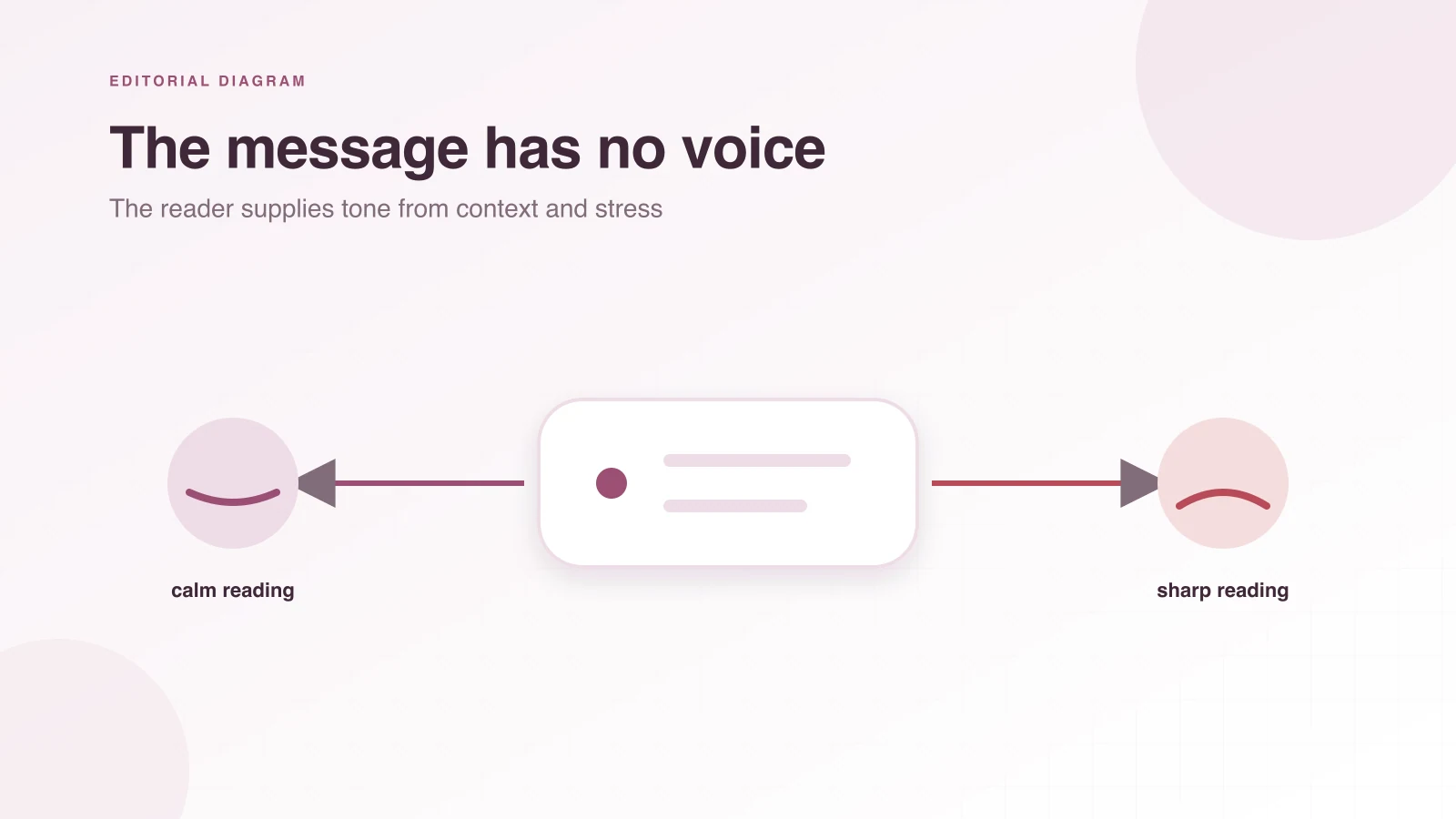
Since the bias is predictable, the fix is to deliberately offset it from both sides. If you are the sender, be extra polite — a notch or two beyond how you would be in person; the warmth that feels excessive to you usually reads as merely normal on the other end. If you are the reader, do the opposite: take your judgment of a message’s sharpness down a few notches, and assume positive intent by default. A terse “ok” is far more likely to mean someone is busy than that they are annoyed with you.