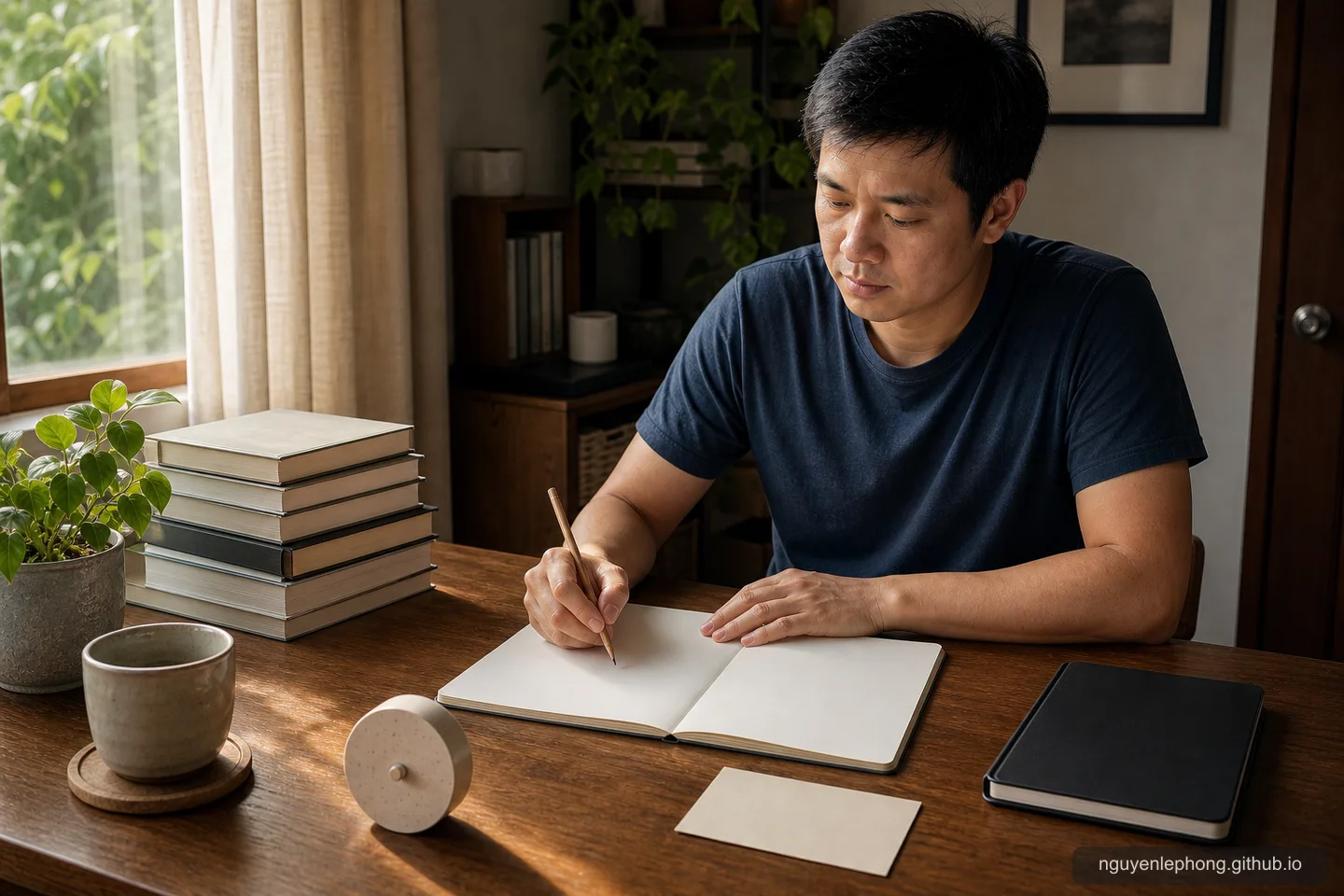
This is a common risk in learning: we accumulate knowledge without ever moving through the stages of real comprehension — from knowing about a thing, to understanding it, to being able to use it. The input keeps flowing, the shelf keeps filling, and yet nothing quite turns into capability. It feels like learning, which is exactly what makes it so hard to notice from the inside.

Symptoms
- Constantly reading new books and articles without applying any of the insights.
- Feeling knowledgeable, yet unable to demonstrate real competence.
- Collecting information as a form of productive procrastination.
- Mistaking recognition for understanding.

Why it happens
- Information feels like progress — the dopamine hit of novelty rewards the intake, not the use.
- Action requires vulnerability and carries the real risk of an imperfect attempt.
- Hoarding knowledge feels safer than exposing yourself to practice.
- Modern information abundance makes consumption effectively endless.
Breaking the pattern
- Set implementation intentions before you consume — decide in advance what you will do with it.
- Practice just-in-time learning over just-in-case learning.
- Create friction for consumption; remove friction for practice.
- Track the actions you take, not the information you consume.