
The first morning is often quieter than people expect. A new teammate sits with a laptop still downloading tools, a welcome message open in chat, and six browser tabs asking for permission. Everyone is kind, but everyone is also busy. The new person smiles, says it is fine, and starts collecting small uncertainties they do not yet know how to ask.

Good onboarding starts by taking that moment seriously. It is not only a checklist of accounts, documents, and introduction meetings. It is the first experience a person has of how the team handles ambiguity, mistakes, questions, and belonging. A team can say it values ownership, but if the first week is mostly silent guessing, the new teammate learns a different lesson.
The goal is not to make someone productive on day one. That pressure usually creates performance theater: a tiny pull request chosen only because it is safe, a rushed tour of architecture nobody can absorb, or a calendar full of meetings that leaves no space to think. A healthier goal is orientation. The person should begin to understand what the product does, who uses it, how the team makes decisions, where the codebase is risky, and where to go when something is unclear.
Context matters before tasks. A new engineer can install dependencies and still not know why the system exists. They need the plain story: what customers are trying to do, which workflows matter most, which incidents shaped current rules, and why the codebase has the shape it has. Even a messy architecture feels less intimidating when someone explains the path that created it. Without that story, every folder looks like a test of intelligence.
A useful onboarding plan gives the first few weeks a gentle rhythm. The first day covers access, local setup, product walkthrough, and a clear buddy. The first week includes one or two small changes with patient review. The second week introduces a real feature area, not just cleanup work. The first month gives the person enough context to own a bounded task, ask better questions, and participate in team rituals without feeling like a visitor.
The buddy role is easy to under-design. A buddy is not a manager and not a permanent rescue service. They are a safe first door. They explain team habits, translate unclear acronyms, point to the right owner, and normalize questions that may feel small. The best buddies do not only answer. They teach the map: which Slack channel to use, which document is trusted, which service owns which behavior, and when it is better to ask in public so the whole team learns.
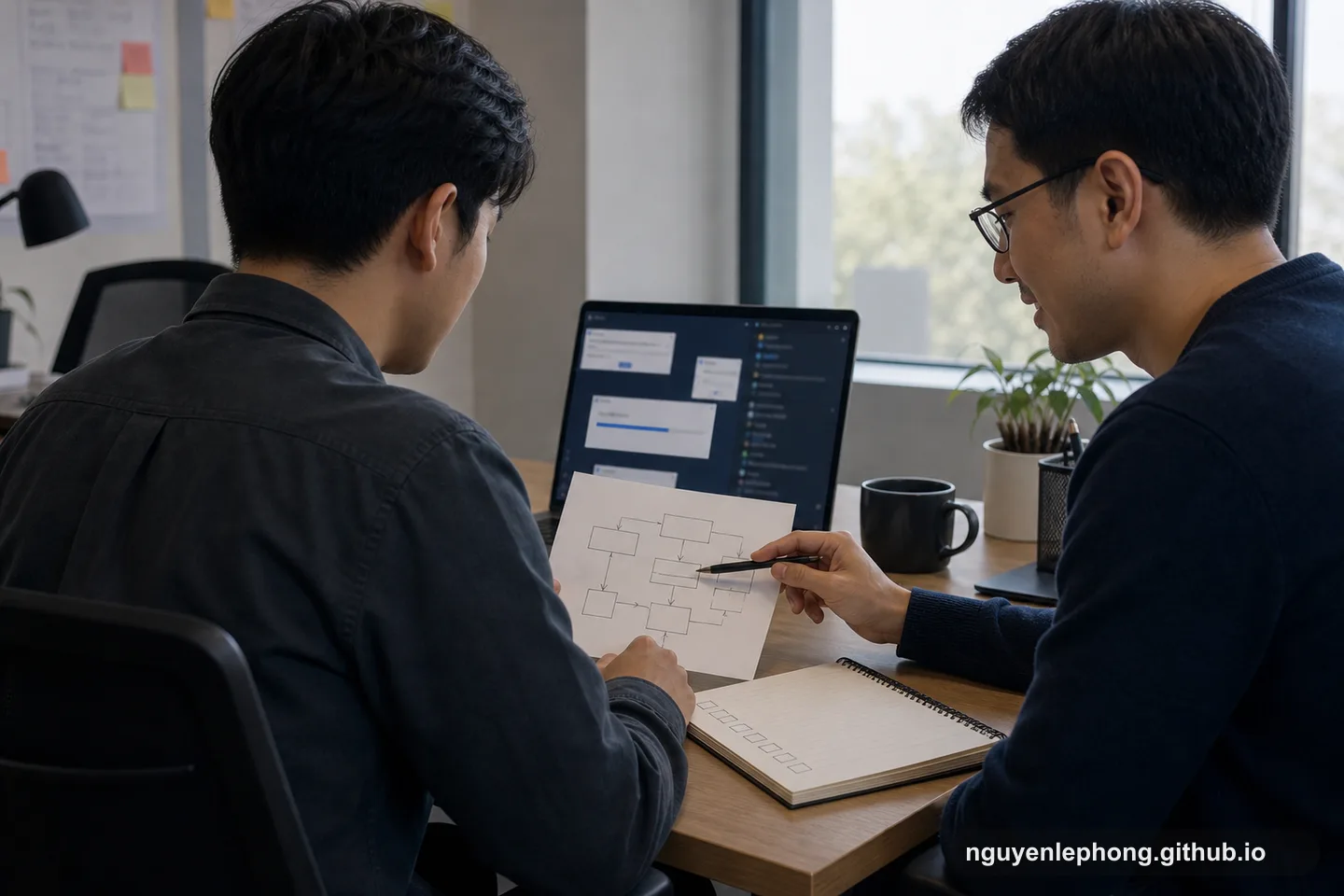
Documentation helps when it is written for a real first week, not for the person who already knows the system. A setup guide should include expected versions, common errors, and what success looks like. An architecture note should name trade-offs and old decisions, not only draw boxes. A runbook should explain how to know whether the service is healthy. Good documentation does not remove conversation. It makes conversation more specific, because the new person can say exactly where they got stuck.
Small early wins still matter. The first pull request should be real enough to touch the product, but bounded enough that the person can finish it without needing to understand the whole company. The review should be careful and kind. This is where the team teaches its standards: how much context to put in a PR, how tests are expected to look, how comments are phrased, and how disagreement feels. A new teammate learns culture through the first review more than through the onboarding deck.

There should also be room for private check-ins. Some people will not say they are lost in a group channel, especially if they are still trying to prove they belong. A simple weekly question helps: what surprised you, what is still confusing, and what should we explain better for the next person? These answers are not only support for the new teammate. They are a mirror for the team. Every confusing step is a small signal about the system everyone else has learned to tolerate.
Onboarding is also a leadership habit. If every new hire struggles with local setup, the answer is not to admire their persistence. It is to fix the setup. If every person asks the same architecture question, the answer is not to repeat the explanation forever. It is to write the missing context down. Each new teammate gives the team one rare gift: the ability to see old confusion with fresh eyes.
There is a calm standard for onboarding: by the end of it, the person should feel more oriented, not more judged. They should know enough to contribute, enough to ask useful questions, and enough to understand that they are not expected to decode everything alone. That does not happen through one perfect document or one friendly welcome call. It happens through many small prepared choices that tell the same story: you are new here, and we have made room for you to learn.
If you remember your own first week on a team, the details that stayed with you may be small: the person who explained an acronym without making it awkward, the README that actually worked, the review comment that taught without embarrassing you. Those details are the real onboarding system. They are also the part every team can keep improving, one arrival at a time.