
There are days at work when a problem appears very clearly on the surface: a release is late, a team responds slowly, customers complain, or one person keeps making the same mistake. The first reflex is usually to fix the visible point. Remind that person to be more careful. Add one more checklist. Schedule another meeting. Move the deadline. Then a few weeks later, the problem returns in a different shape, and we realize we only repaired the loudest part.
Reading The Art of Thinking in Systems made me think about that pattern more carefully. The book does not simply say that everything is connected. That is true, but too broad to be useful. The more practical point is that many problems in work and life are produced by structure: who sees which information, which behaviors are rewarded, where the delay sits, how slowly feedback returns, and which bottleneck is making the whole system wait in line.
Systems thinking begins by slowing down before assigning blame. A team that repeatedly misses deadlines is not automatically careless. The backlog may always be overfilled. Estimation may be pressured into looking clean too early. The final reviewer may be the bottleneck nobody wants to name. Small risks may not be raised because the person who speaks early gets treated as negative. In that case, another speech about responsibility only makes people tense. The real loop remains untouched.
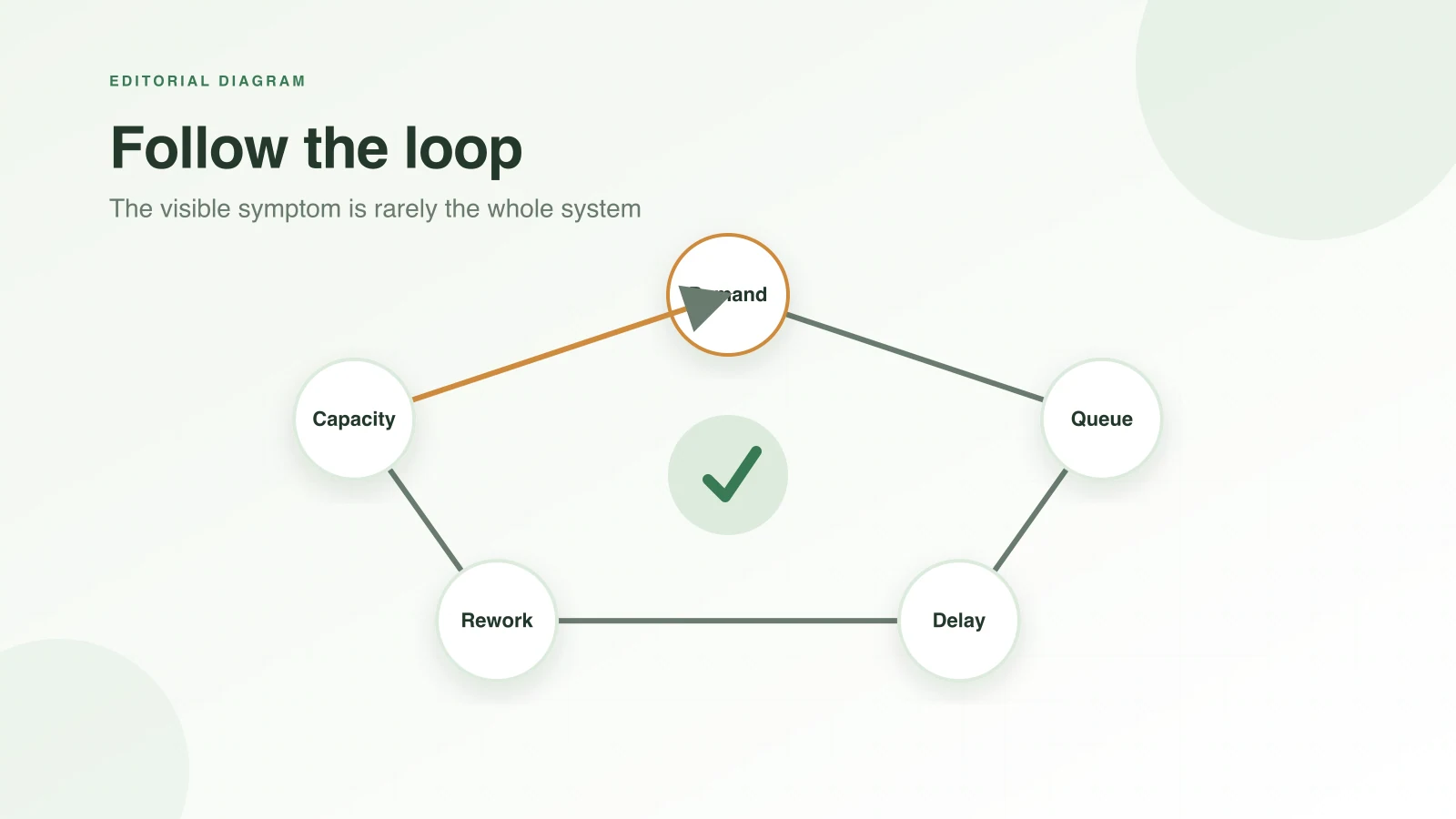
A system often has stock, flow, and feedback. Stock is what accumulates: technical debt, trust, cash, energy, fatigue, skill, or even resentment. Flow is what moves in and out, making that stock rise or fall. Feedback is the signal that returns and helps the system adjust. When feedback arrives late, people react badly with confidence. We think things are fine today because the consequence has not appeared yet, while technical debt, exhaustion, or lost trust is quietly building below the surface.
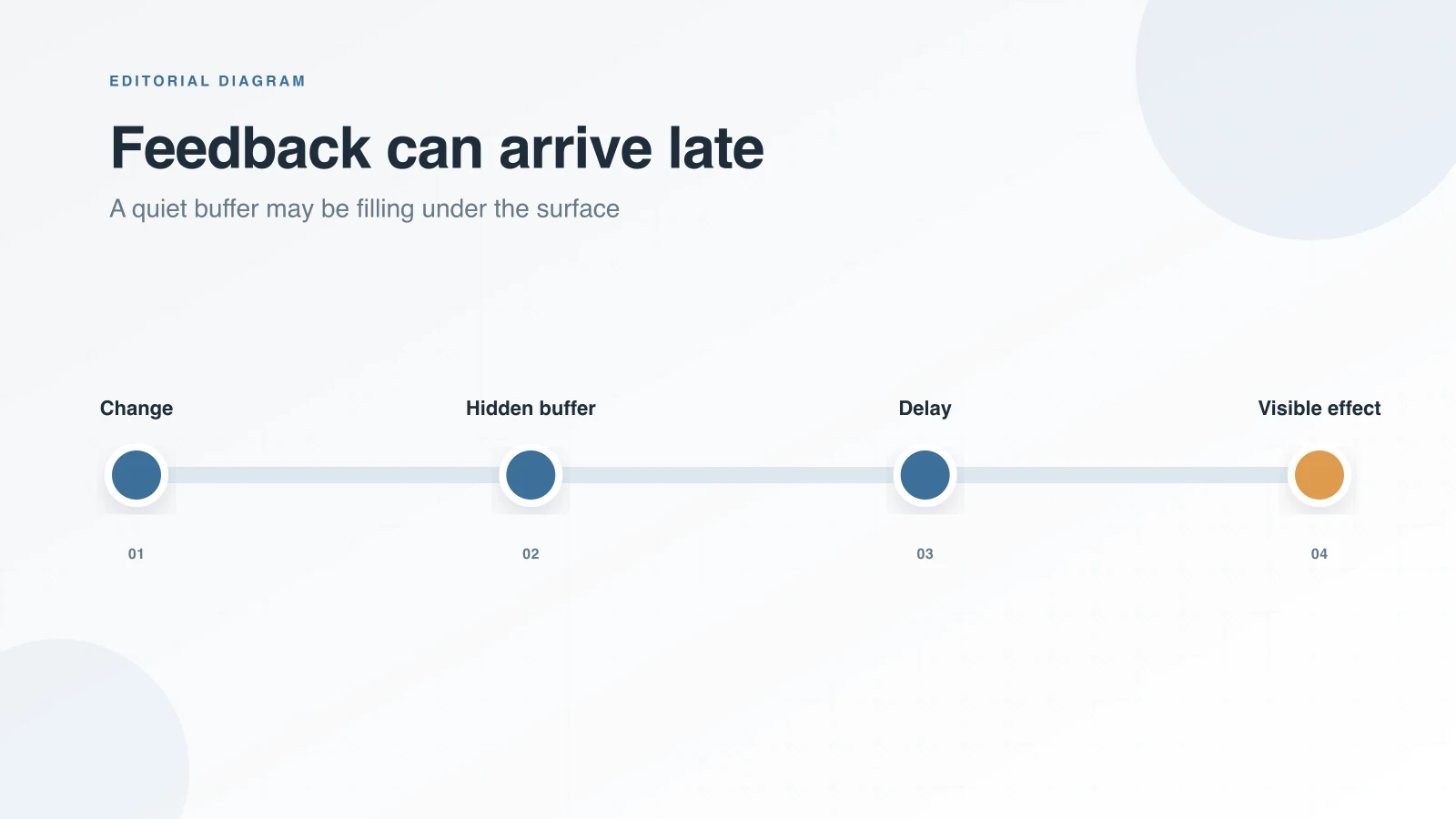
This is very close to learning. Someone studying English for fifteen minutes a day may not feel different after one week. The stock of skill grows too slowly for the eye to notice. If the only feedback is the feeling of still being bad, that person may quit before the system has time to respond. But if the feedback is designed smaller, such as the number of sentences understood, the number of times a structure was used correctly, or the number of days the rhythm was kept, the system starts giving signals close enough to sustain the behavior.
At work, the most dangerous solutions are the ones that create a feeling of progress while pushing the problem somewhere else. Adding people to a late project can make it later if onboarding and communication cost more than the new capacity creates. Reducing QA can make today look better, then increase support and rework next month. Cutting meetings can save time, but if information has no other path, ambiguity will return through bugs, misunderstandings, and bad decisions.
The book reminds me that good leverage is rarely located where the noise is loudest. It may sit in a small rule, an incentive, a measurement, or a way to make feedback arrive earlier. If you want a team to raise risks early, do not only say, "be transparent." Make sure the person who reports risk early is not punished more harshly than the person who hides risk until the last minute. If you want better quality, do not only add a slogan. Measure rework, reserve proper review time, and give people enough authority to say no when the input is unclear.
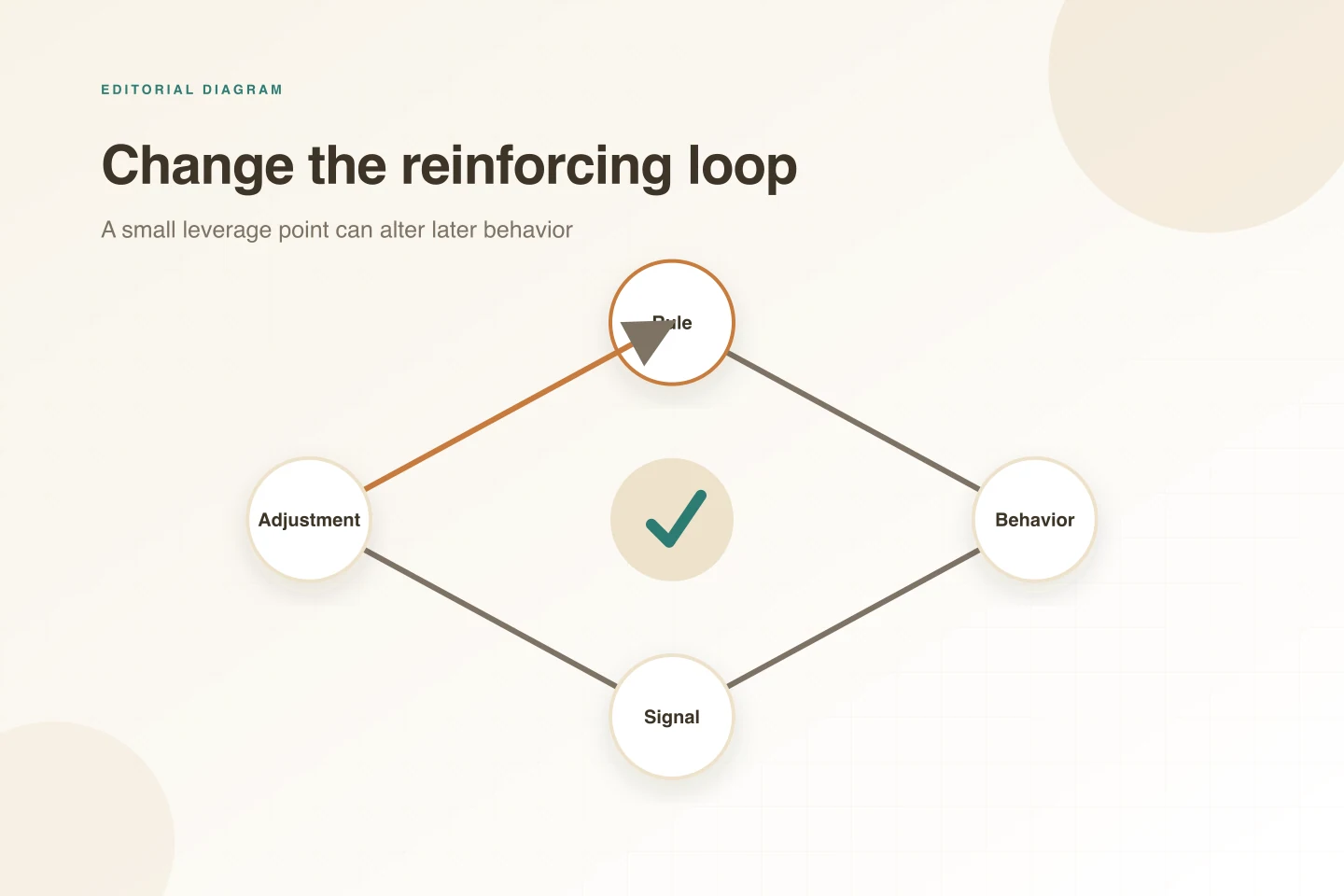
A recurring problem is often not a recurring accident. It is a system behaving exactly as it has been designed to behave, even when that design was accidental.
This way of reading also makes me less extreme about people. Some people are truly careless. Some teams do poor work. Some decisions are simply wrong. But before concluding too quickly, I want to ask: what structure is making this behavior reasonable? If someone keeps taking shortcuts, is the proper path too full of friction? If a team keeps staying silent, is the system rewarding silence? If I keep procrastinating, is the goal too far away while the feedback is too vague?
The Art of Thinking in Systems does not make life simpler. It makes me less eager to trust simple solutions. Some issues really do need one small fix. But when a problem keeps coming back, the more respectful thing may be to understand it as a loop, not to suppress it as a symptom. If you have met a problem that kept returning in work or life, the useful question may not be, "who made the mistake again?" It may be, "what is this system quietly teaching people to do?"