
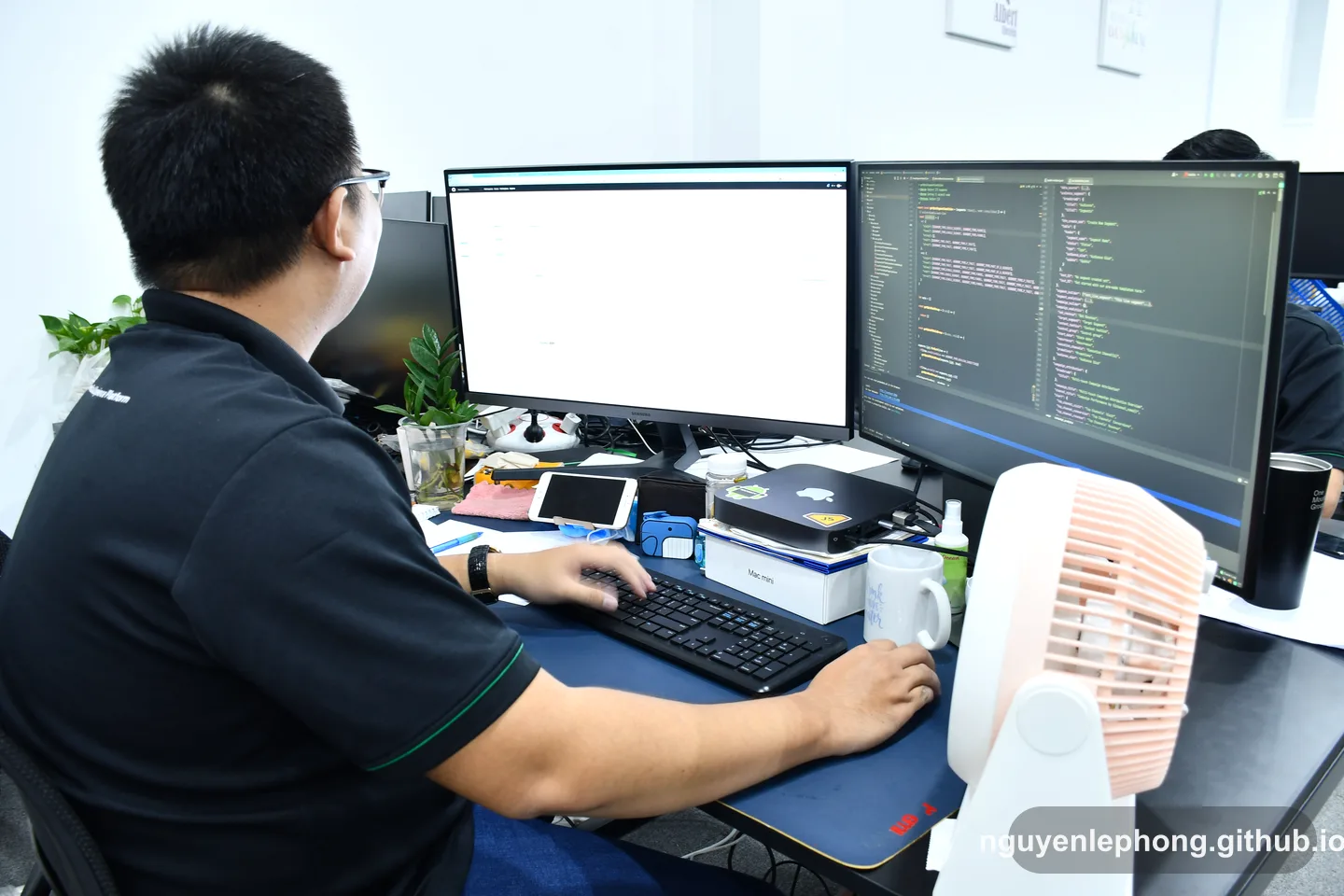
In an ordinary code review, the difference between being smart and being trustworthy can appear in one short comment. Someone sees the bug faster than everyone else. They understand the architecture, notice the weak assumption, and can explain the failure in one sharp sentence. Technically, they are right. But after the meeting, the question that stays with me is different: did that sharpness make the team clearer, or did it make people smaller?
Intelligence by itself is not kind or unkind. It is more like a sharp knife on a kitchen table. In the hand of a careful cook, the knife makes work cleaner, food easier to prepare, and a difficult task more precise. In the wrong hand, the same sharpness can injure. The knife did not decide its purpose. The person holding it did.
Wisdom works in a similar way. A smart person can learn faster, speak more persuasively, find system weaknesses earlier, read incentives more accurately, and understand other people with more precision. Those are useful abilities, but they are also amplifiers. They make the direction of the person behind them more powerful. If there is responsibility, restraint, and respect inside, intelligence can protect and build. If there is pride, greed, or the habit of treating others as tools, intelligence can make manipulation more refined.
A kind person without much skill may move slowly. They may miss details, need help, or fail to protect themselves in a complicated situation. That has real cost. But the harm they can do is often limited by the same lack of leverage. A talented person without character is different. They know which part of the truth to hide, how to frame a choice so it looks neutral, how to win trust before using it, and how to stand in the safest place when a shared problem becomes painful.
At work, this rarely appears as a dramatic moral test. It shows up in small decisions. A strong engineer can use their ability to raise the team's standard, or to make slower teammates feel permanently inferior. A sharp manager can read a risk early and bring it into the light, or stay quiet until someone else has to carry the hardest part. A persuasive founder can describe uncertainty honestly, or dress a fragile plan in language that makes other people feel foolish for asking basic questions.
This is why I increasingly understand the old habit of placing character before talent. Talent answers how far and how fast someone can go. Character asks where they are going, who pays the cost when they move, and what kind of trust is left behind. A team, company, family, or society still needs capable people. But capability without direction is only speed. It does not tell us whether the road is worth taking.
Character can sound like a large word, but in ordinary life it is practical. It can look like clarity: not using a weakness just because we can see it, naming a risk instead of presenting only the favorable side, and remembering that a correct decision on a spreadsheet still affects people who have to live with it. It can also appear when we try to create trust for something not yet proven: are we making people safer and freer to decide, or are we using our skill to make doubt feel inconvenient?

The question matters even more as our tools become stronger. A person who writes code well, uses AI well, understands data, understands systems, and knows how to persuade is holding many sharp knives at once. The point is not to fear skill. It is to keep asking what the skill is serving.
The people I respect most are not always the smartest people in the room. Often they are capable enough to see many possible moves, and grounded enough not to choose the one that harms others for an easy win. They can win an argument with a sharp sentence, but choose to make the problem clearer instead. They can use hidden information for advantage, but choose to give people enough truth to decide well. Intelligence makes people impressive. Character makes them safe to trust. When the two grow together, sharpness stops being a threat and becomes a careful hand that knows what it is cutting, for whom, and when to stop.