
If you own a car, you probably know this scene. A weekend morning, the car goes into the wash bay, and you sit on a plastic stool next to the ice cooler, scrolling your phone and looking up every few minutes to see whether it is your turn yet. You ask how much longer and get the familiar answer, just a little bit. You pay however is convenient, and the next time you come back nobody remembers what was done to the car last time or what it cost. None of it is serious. It is just a little time left hanging, a little uncertainty, repeated every week across tens of thousands of shops around the country.
BonBon started from exactly that feeling. The line the team put on its homepage sounds simple: know when your car is ready, see where every dong goes. Keeping a promise that simple takes a whole system that has to work correctly behind it, and a small group of people patient enough to let that system take shape.
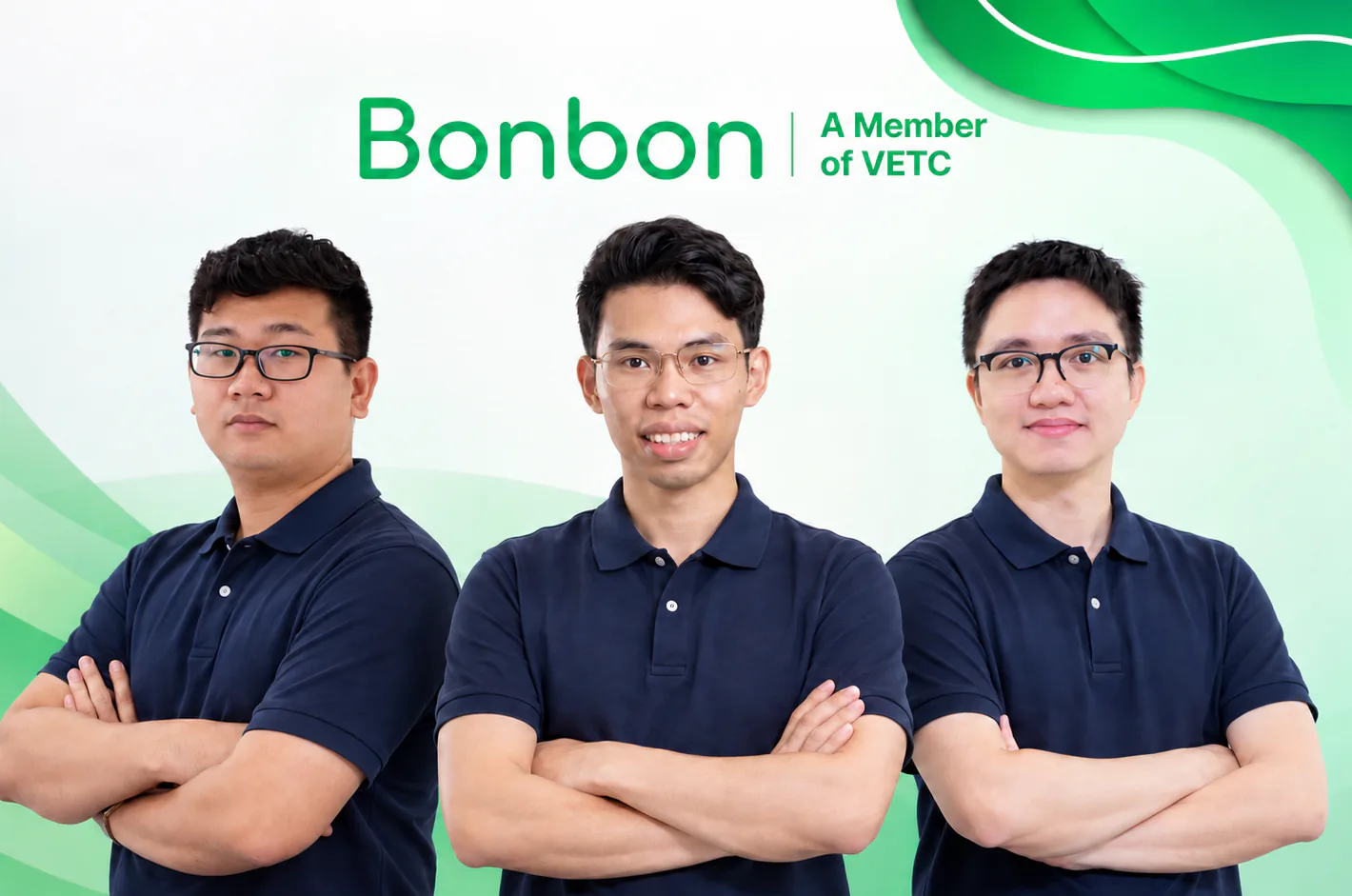
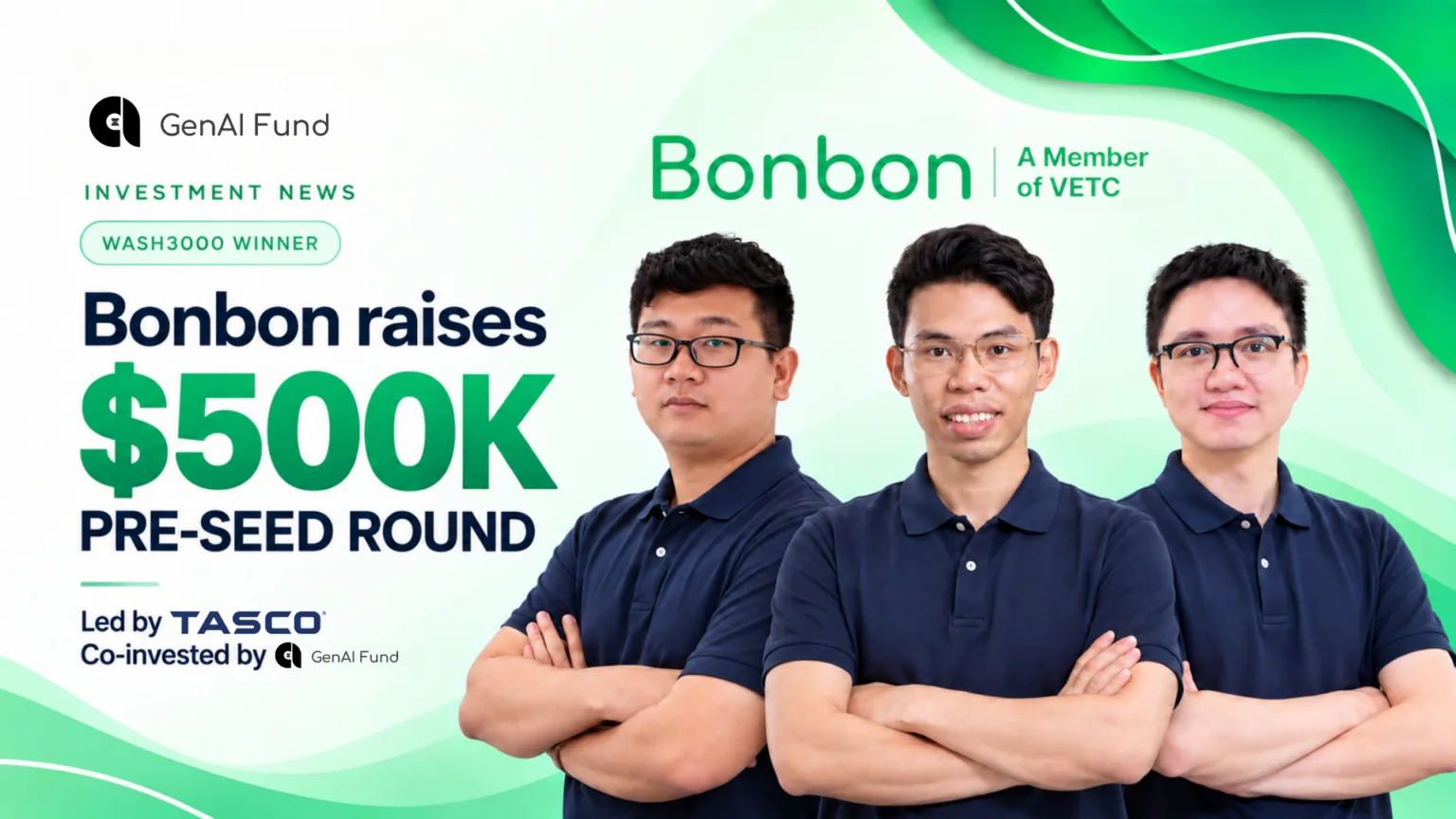
On September 21, Tasco announced it had led a $500,000 investment round into BonBon, with GenAI Fund participating. The next day VietnamPlus, the Finance and Economics Magazine, Bloomberg Businessweek Vietnam, and then TNGlobal and e27 across the region carried the news. On the 23rd GenAI Fund published its own announcement, DealStreetAsia picked it up the same day, and on the 25th Vietnam Investment Review ran the story in English. Tasco's article includes a photo with a short caption underneath: BonBon's founding team, Nguyen Chi Dung, Vu Duy Hung and Nguyen Le Phong. I looked at that line for a long time. There was joy, but more than that there was weight, like being handed something valuable before you have worked out where to keep it safe.
A caption, and the weight behind it
From the outside, a funding round often reads like a finish line. There is a number, a list of investors, a group photo, messages of congratulations. From the position of someone named in it, it looks much more like a starting line. That five hundred thousand dollars is not sitting in anyone's pocket. It is the trust of Tasco and GenAI Fund, converted into a very specific amount of time for the team to prove that what we said in the pitch room holds up in the real world. The press called it a pre-seed round. I like that name because it is honest: the seed is not in the ground yet. We have only just been given the right to plant it.
The co-founder title is similar. It does not change my daily work very much. I am still the one opening a terminal late at night to read the logs of a sync that drifted, still writing one more test just to be sure the payment screen never shows a wrong number. What changes is the weight of each decision. Before, a clumsy technical choice meant a bit more technical debt at worst. Now it can mean a few weeks of runway, a partner garage that loses patience, a car owner who never comes back for a second visit.
Some days I ask myself whether I am steady enough to stand in that caption. The honest answer is not entirely. I suspect very few people ever are. People usually grow into a role rather than walking in with everything already in hand. What I am sure of is that I am not doing this alone. The other two co-founders, Nguyen Chi Dung and Vu Duy Hung, went through the weeks with me when everything was still a hypothesis on paper. In a team this small, nobody gets to stand on the sidelines. Everyone builds, everyone persuades, everyone sits and listens to customer feedback.
Why start with car washing
People have asked me why we did not start with something bigger. Car washing sounds small. But precisely because it is small and repeated, it is the most frequent point of contact between a car owner and the whole world of car services. A car might need a major repair once every few years, yet it needs washing every month and routine care every few months. Whoever holds that recurring moment with care gets the chance to understand the car, understand the person driving it, and gradually accompany them across the whole life of the vehicle.
By the program's estimate, Vietnam has more than 12,500 car wash and car care sites, most of them independent small and medium shops, each running things its own way. In 2025, car sales passed 600,000 units, as BBW noted. Every new car is another owner looking for a familiar place to trust. On the other side, many skilled mechanics with loyal regulars still record orders in a notebook, remember appointments by memory, and are almost invisible online. The gap between those two sides is where BonBon wants to fit.
What I value most about BonBon's direction is how it chooses to stand beside what already exists. The team is not building a new chain of shops, and it is not competing with mechanics who have spent decades in the trade. BonBon is a thin connection layer placed over the existing network: helping shops manage orders, reduce leakage and reach new customers, and helping owners know what stage their car is at and what it costs. Tasco describes this as using the market's existing capacity. I understand it more simply, as respecting the people who were there before us and trying to make their work a little easier.
If I had to keep one idea from this part, it would be that big opportunities often hide inside small annoyances everyone has learned to tolerate. Waiting without a clear time, paying without a clear breakdown, remembering service dates by feel. Nobody writes news stories about those things. But when someone sits down and untangles them with care, the value created is very real, and very close to many people's daily lives.
Standing on someone else's shoulders, and what it costs
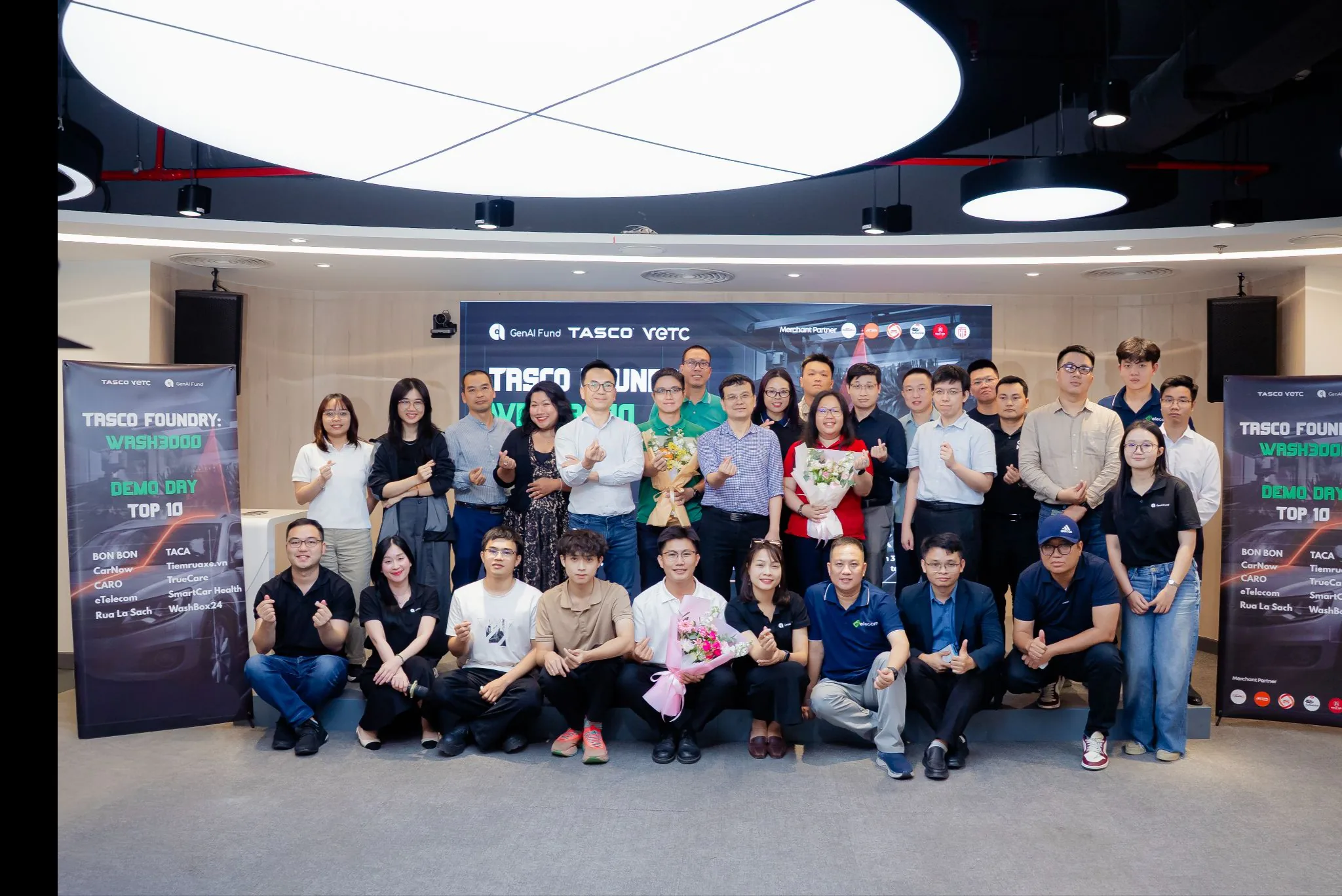
BonBon was one of ten projects selected from nearly 100 applications to Tasco Foundry Wash3000, the venture builder program Tasco runs with GenAI Fund. The three months that followed were the densest stretch of my career. From a rough MVP, the team took the product into a live field pilot, then stood among the Top 3 at Demo Day in front of investors. Laura Nguyen of GenAI Fund said something that stayed with me: the core value of the venture builder model is turning a corporation's assets and scale into a launch pad so a startup can move faster, while pushing the team to prove it can operate. The launch pad is real. The second half of that sentence is just as real.
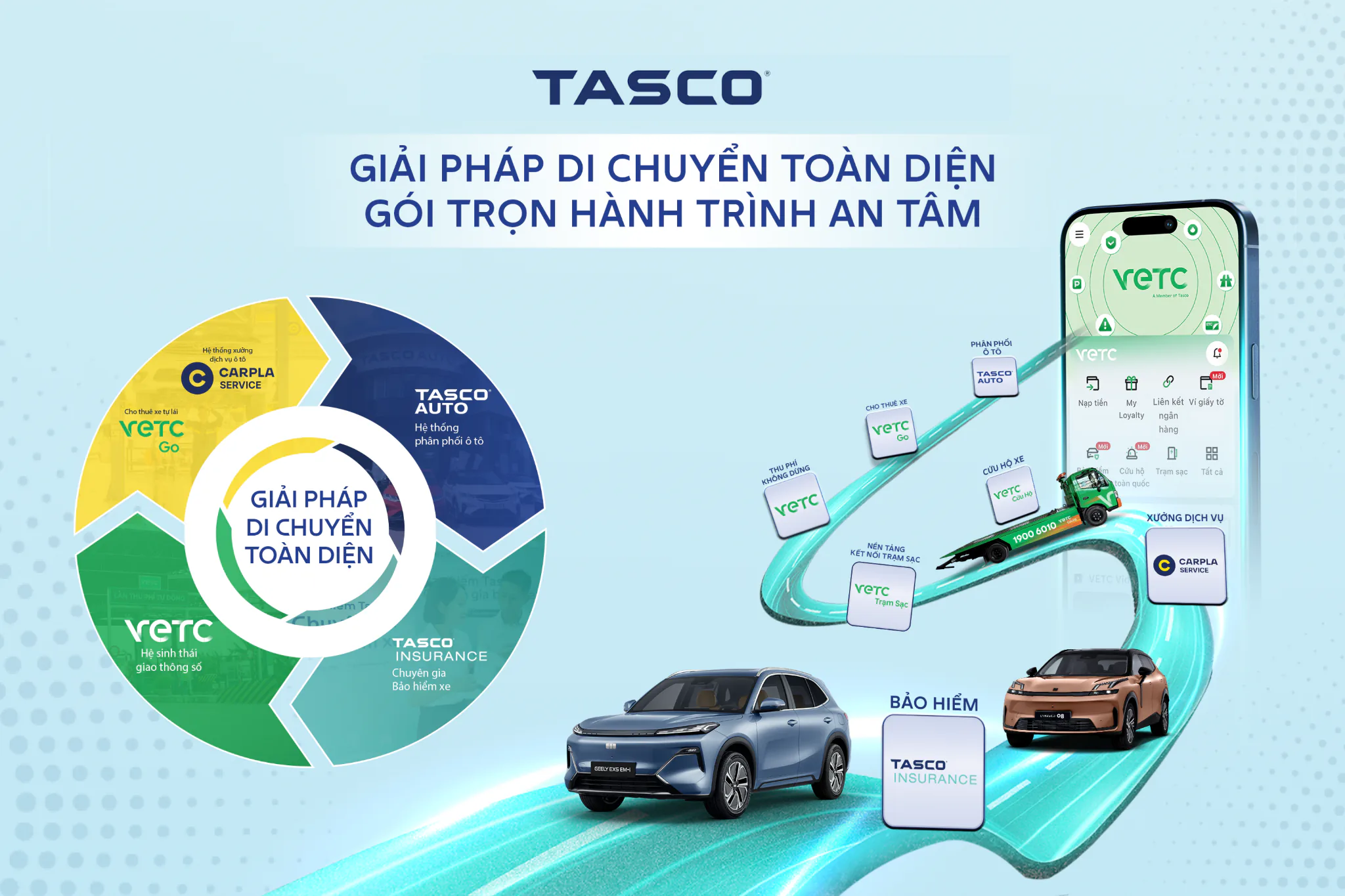
For me, that launch pad had a very concrete shape: a twelve screen Mini App running inside the VETC app, which already has around 4.3 million users. Putting your product in front of that many people is a rare privilege for a company that has only just been born. It is also why there is no room for carelessness. A small bug in your own app bothers a few hundred trial users. A small bug inside a partner's app touches trust that partner spent years building.
So most of my engineering effort in this period went into things nobody sees. Silent login through a partner code, so users never have to create yet another account. Sessions kept only in memory, so a failure leaves nothing unnecessary behind on the user's phone. Analytics limited to an allow list, measuring only what genuinely needs measuring. Kill switches for each feature, like the circuit breaker in your house: you hope you never pull it, but you need to know exactly where it is. Controlled rollout, transactional audit, checksum and CSP gates before every release, and more than 800 unit tests running across the Go API, the backoffice, web and mobile. The end goal sounds a little backwards: make every release boring. A boring release means nobody stays up all night, and the partner can comfortably extend a little more trust.
What I learned here, and I think it holds for people outside startups too, is that when you borrow someone else's stage, the first thing you owe them is care. Big resources help you move fast, but they also magnify every mistake. A large partner's trust rarely comes from one good pitch. It is gathered from hundreds of times you kept your word on very small things, often things only you know you did.
The challenges I do not want to paint over
Writing about a funding round and only telling the happy parts would not be honest. BonBon still has plenty of hills ahead, and naming them is one way of respecting the reader.
The first hill is on the garage side. Shop owners have watched many apps arrive, promise a lot, and quietly disappear. They are busy, their hands are covered in oil, and they have no time to learn new software just because someone says it is good. For them to use it, the product has to be simple enough to need almost no instructions, and it has to give them something they can see right away, like one more car through the bay or one less leak in the books. There is no shortcut to that kind of trust. You go there, you listen, you go back and fix things, and then you return.
On the car owner side, habit is the hardest thing to change. People are used to calling the shop they know, or stopping wherever is on the way. A platform only earns its place when it is clearly better than the old habit. Being newer is not enough.
The third hill made me, as an engineer, much more humble. The real experience happens in the physical world, not in the code. I can write a booking flow with no bugs, but if the car comes back late, or a scratch goes unmentioned, the user will not separate the software's fault from the shop's. To them, all of it is BonBon. Standardizing quality across a network of independent shops is a long operational problem, and a few releases will not solve it.
Then there is living next to a large ecosystem. Connecting with VETC opens a very wide door, but the rhythm of a corporation and the rhythm of a three person startup do not always match, and however good the support, a startup still has to keep its ability to stand on its own. BBW also noted that venture funding in Vietnam has been cautious this year. In that climate, half a million dollars is a meaningful vote of confidence, but for a platform that wants to cover the whole market, it only covers one leg of the journey. That leg has to lead to numbers convincing enough for the next step.
And there is a very human challenge. Once your name is in the news, expectations rise with it. Friends send congratulations, acquaintances ask when the next round is. Keeping a clear head, and paying attention to the next garage and the next car owner rather than to the applause, is a discipline I am still practicing every day.
What I hope you take with you
I am not writing this to tell a success story, because honestly that story is nowhere near its ending. I am writing because the past few weeks taught me a few things that might be useful to someone, whether you are at a startup, working at a large company, or tinkering with a small project in the evenings.
The moment other people see is always much later than the moment things actually began. The article came out on September 21, but the decisions that made it possible were made from April onward, in evenings nobody witnessed. If you are in the middle of a stretch nobody can see yet, that does not mean you are standing still. Things may simply be accumulating, quietly, the way they usually do.
The small annoyances around you deserve more attention too. They are often signs of a gap everyone has agreed to live with. Carefully untangling one small, recurring annoyance can be worth more than chasing a big idea nobody really needs.
When you get to move fast because of someone else's platform, treat it as luck that comes with responsibility. That platform might be a corporation, a manager who believes in you, or a community that gives you a chance to speak. What you owe them is care, even in the smallest things.
And the thing I remind myself of most: a new title does not make anyone better overnight. It only hands you more responsibility, along with the chance to slowly become someone who deserves it. I am still learning. It is just that each lesson now costs a bit more.
Last night I opened that photo caption one more time. It is still just a small line of text. But I understand it better now: it is a promise written in front of many people, and my part is to make that promise true. Thank you to Tasco and GenAI Fund for believing when BonBon was still very small. Thank you to the garages that agreed to try things with us when we had little to prove, and to the first users who were patient with versions that were far from perfect.
If you have ever seen your name show up somewhere before you felt ready for it, or you are walking a long stretch that nobody can see yet, I would love to hear your story. Perhaps the stories that never make the news are the ones that count the most.
References
- Tasco (Sep 21, 2026). Tasco leads a $500,000 investment round into Bonbon, an O2O platform connecting car owners with garages and car care centers (Vietnamese). Official announcement.
- VietnamPlus (Sep 22, 2026). Tasco and GenAI Fund invest $500,000 in technology platform Bonbon (Vietnamese).
- Bao Moi (Sep 22, 2026). Tasco and GenAI Fund invest $500,000 in technology platform Bonbon (Vietnamese). Syndicated from VietnamPlus.
- Finance and Economics Magazine (Sep 22, 2026). Tasco invests $500,000 in car care platform Bonbon (Vietnamese).
- Bloomberg Businessweek Vietnam (Sep 22, 2026). Startup Bonbon raises a $500K pre-seed round from Tasco and GenAI Fund (Vietnamese).
- TNGlobal (Sep 22, 2026). Vietnam's Bonbon Mobility raises $500,000 pre-seed round led by Tasco, GenAI Fund co-investing.
- e27 (Sep 22, 2026). Bonbon Mobility raises US$500K to digitise Vietnam's car-care market.
- GenAI Fund (Sep 23, 2026). Building Beyond the Pilot: GenAI Fund Backs Bonbon's $500K Pre-Seed Round. Co-investor announcement.
- DealStreetAsia (Sep 23, 2026). SEA Digest: Bonbon Mobility bags funding; Grab partners OpenAI.
- Vietnam Investment Review (Sep 25, 2026). GenAI Fund backs Bonbon Mobility's $500,000 pre-seed round.