
A listing photo can make a home look finished before it is understood. Home buying becomes emotional very quickly because the decision is not only about walls. It touches safety, family expectations, pride, commute, future plans, and the hope of finally having a place that feels stable.
Floor plans and build quality reveal how the home will function after the staged surface disappears. That emotional weight is exactly why the process needs structure. A buyer should slow the decision down enough to see the legal, financial, location, quality, and lifestyle parts separately.
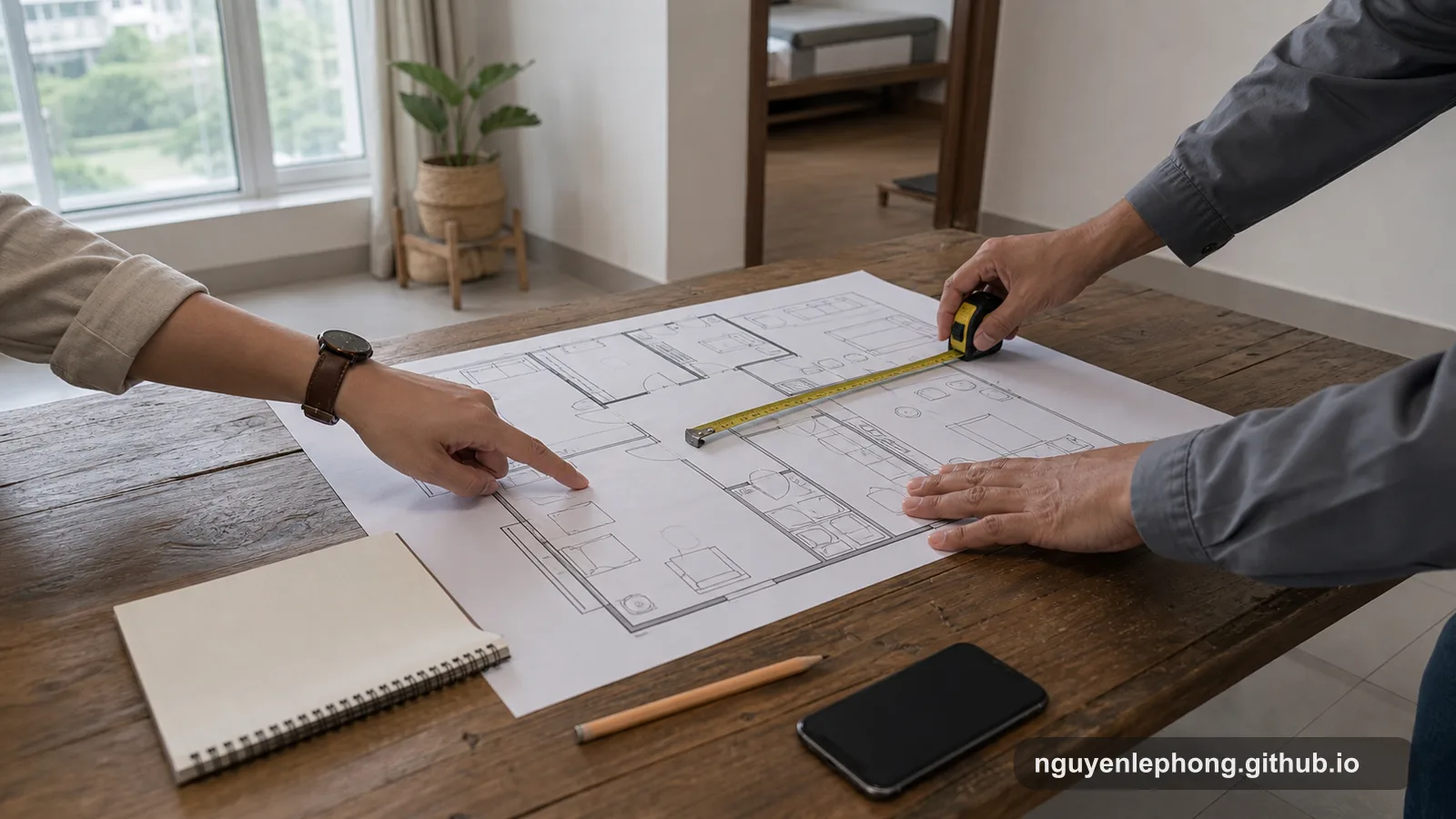
Movement flow, light, ventilation, storage, waterproofing, wiring, plumbing, cracks, drainage, and maintenance access should be reviewed. None of these checks are glamorous, but they protect the buyer from treating a large commitment like a weekend purchase. A home can be improved later, but some mistakes become expensive because they are hard to reverse.

A cheaper home may become expensive if hidden repair work is large. There is rarely a perfect option. A better location may cost more, a larger space may increase commute time, and a lower price may come with repair or legal risk. The point is to choose the trade-off consciously.
Bring a knowledgeable person or inspector when the decision is significant and the defects are not easy to judge alone. It helps to write down the non-negotiables before viewing too many places: budget ceiling, loan comfort, legal requirements, location limits, repair tolerance, and the minimum buffer left after purchase.

Inspection is not about finding reasons to dislike a home; it is about seeing the real home clearly. A good home decision should still feel calm after the excitement fades. That calm comes from evidence, not from pressure.