At 9:30, the video call opens and the same small ritual begins. One person reads from yesterday. Another person reads from the board. Someone says "no blockers" while their face says otherwise. The meeting ends on time, which feels efficient, but nothing really changed. The team has reported status, yet the day is not much clearer.

The daily standup is one of the most familiar ceremonies in software, and maybe because it is familiar, teams stop asking what it is for. It can become a roll call of individual activity: what I did, what I will do, whether I am blocked. That format is not useless, but it is easy to perform. People learn how to sound busy. The board learns nothing. The team learns little.
A better standup is a short strategy conversation about the next working day. Not strategy in the grand executive sense, but strategy in the practical sense: where is flow slowing down, what risk is getting larger, what needs pairing, what should we stop starting, and what decision would make today easier?
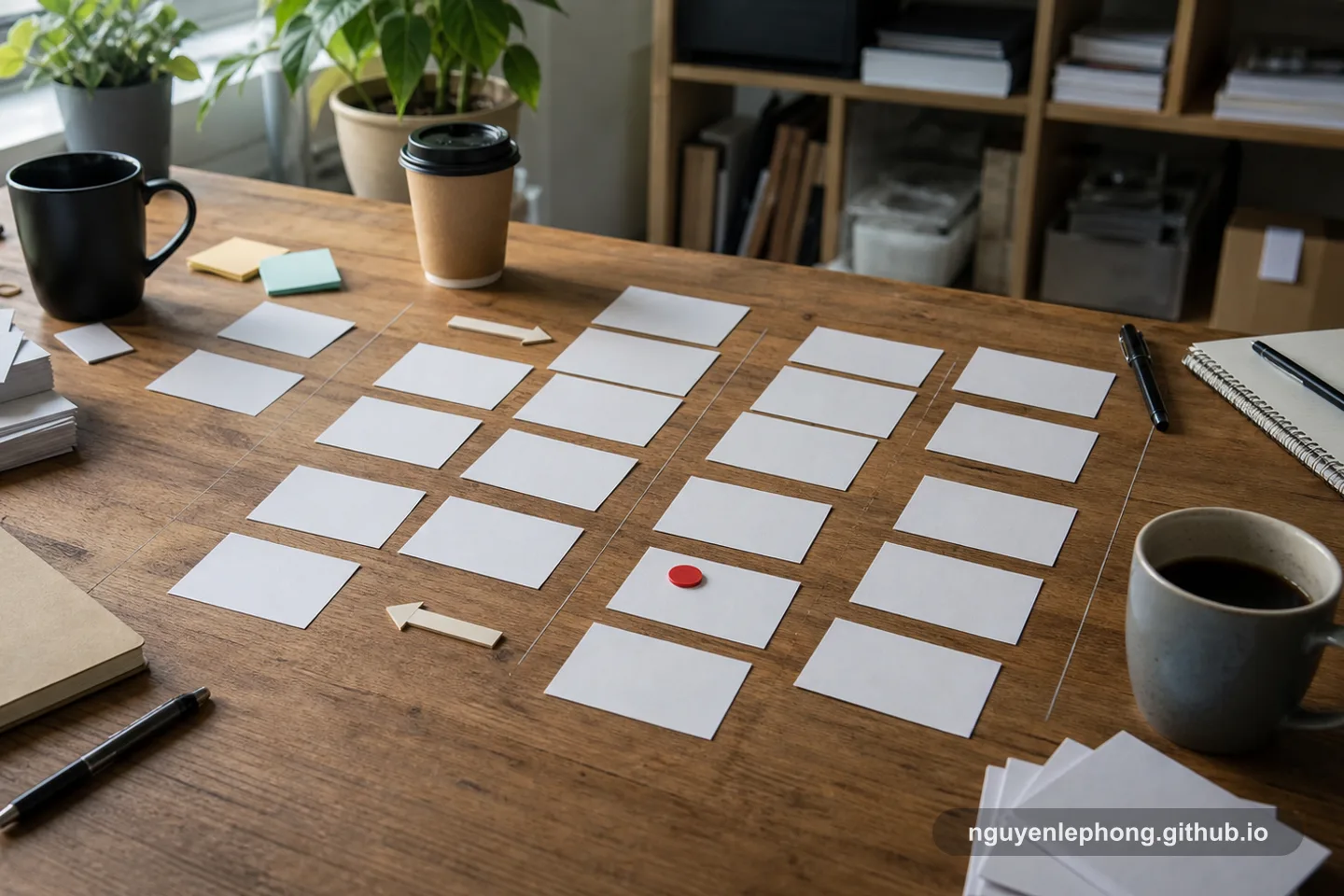
The shift begins by looking at work, not people. Instead of asking each person to justify their yesterday, the team can walk the board from right to left. What is closest to done? What is stuck in review? What is waiting for clarification? What has been in progress too long? This changes the emotional shape of the meeting. The question becomes not "are you productive?" but "how do we help the work move safely?"
A useful standup also makes blockers more honest. Many blockers are not dramatic. They are small uncertainties: an API contract not confirmed, a test environment behaving strangely, a reviewer overloaded, a product edge case nobody wants to decide. If the team only treats a blocker as "I cannot do anything," people will hide these softer risks. By the time a blocker is officially declared, it has already cost two days.
The daily meeting should also protect focus. If five new tasks are started while three old ones are almost done, the team is probably creating motion without finishing. A good standup gently asks: what can we finish today before we begin more? Who needs help to close the loop? Which item should wait, even if it is interesting? This is where the meeting becomes strategy, because sequencing is strategy at the scale of a day.
Managers and leads need care here. If every update is answered with judgment, the standup becomes a performance stage. If every blocker becomes a long problem-solving session, the meeting becomes heavy and people start avoiding the truth. The healthy pattern is simple: name the issue, decide who will continue the conversation after the standup, and move on. The standup opens doors. It does not need to walk through all of them.
Remote teams need even more intentionality. A board link, clear working agreements, and concise async notes can prevent the daily call from becoming the only place information exists. Some teams do not need a live standup every day. But every team needs a daily way to inspect flow and adjust. The ceremony is optional. The feedback loop is not.
The quiet question I like is: what did this standup change? If the answer is nothing for many days in a row, the team may be reporting instead of coordinating. A useful standup should change at least one small thing: who pairs with whom, which item gets reviewed first, what risk gets escalated, what work waits until tomorrow.
The standup is not meant to prove that everyone was busy. Most people already are. It is meant to help a group of busy people become a little more aligned before the day carries them away. When it does that, fifteen minutes can be enough. When it does not, even five minutes can feel too long.
A useful test is simple: after standup, does anyone know what to do differently? If the answer is no, the meeting may be tidy, but the work is still waiting for a real conversation.