
The Nha Trang sun came up quickly that morning. My shoes started gripping the dirt, my backpack found its weight on my shoulders, and ahead of me a line of pale-blue shirts began moving into the first slope. The photos make everyone look fresh and ready, but in that exact moment I was not as confident as I looked. One very honest thought kept running through my head: can I really keep up with this whole route?
That question does not only appear on a mountain. At work, before a project larger than anything I have handled before, a new role, or a difficult conversation, I have also caught myself lowering my own expectations before I even begin. Hoang Nguu Son reminded me of something simple: some limits only begin to move when we step into the challenge, take it section by section, adjust the pace when we are tired, and continue.
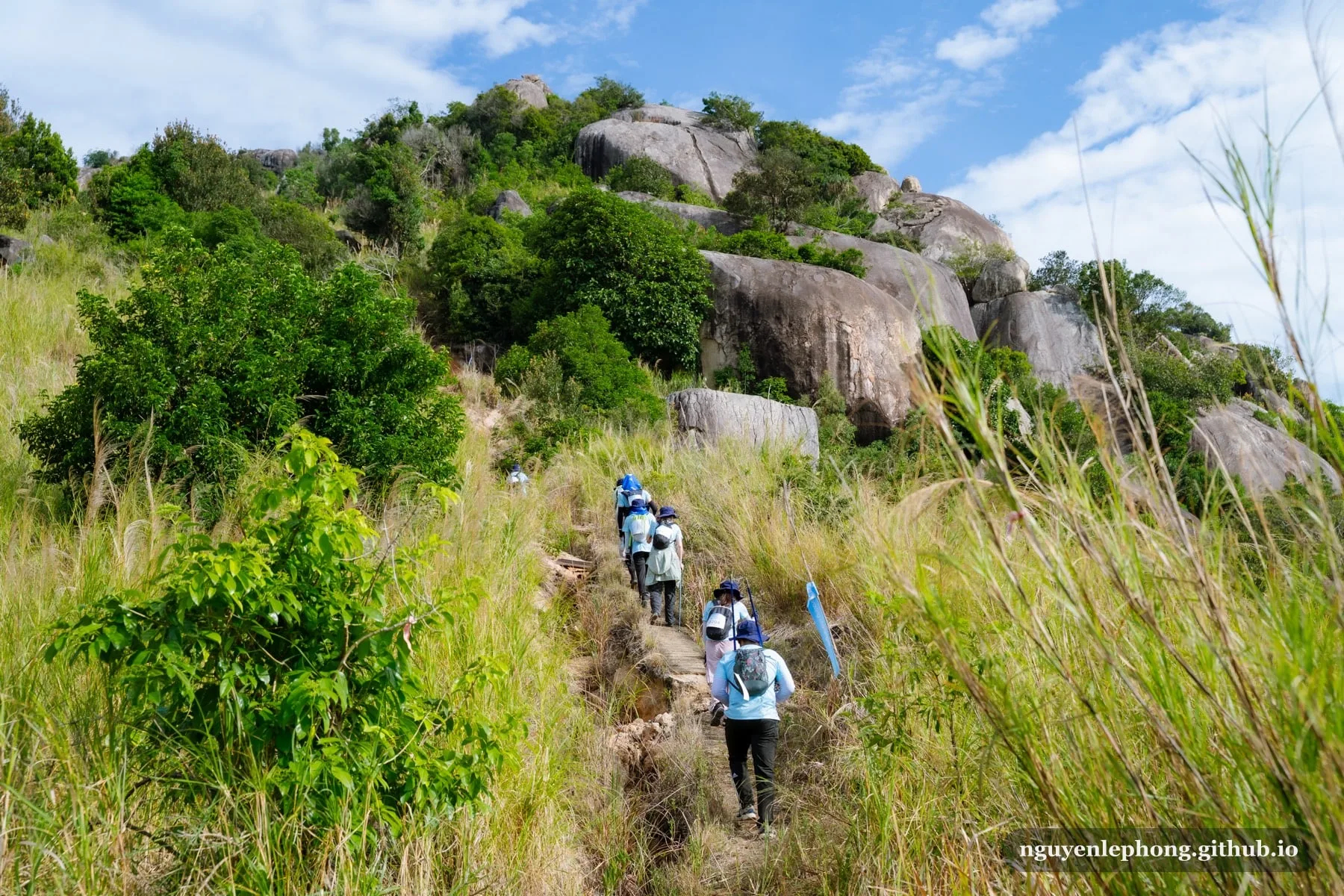
This was a Zalo team trek, so the route was never only a private story. There were matching shirts, bucket hats, numbered backpacks, quick calls to wait a little, and small glances back to make sure the person behind was still fine. Alone, I might have turned the mountain into a private argument with doubt. With a team, I learned something else: reaching the finish line takes willpower, but it also takes a sustainable pace that many people can keep together.
The way Znews covered the trip brought back one detail I liked: more than 150 people from Zalo climbed Hoang Nguu Son, often called the "roof" of Nha Trang. That number did not make the memory louder. It made the memory more human. Inside one large group were many small stories: someone on a first trek, someone unsure about their knees, someone saving energy in silence, someone still smiling with a shirt already soaked in sweat.
The route was around 15 km for both directions, passing five checkpoints before the 972 m summit marker. Remembering those details, the day feels less like a spontaneous push and more like a carefully supported journey: water, food, medicine, checkpoint teams, and pauses at the right moments. Willpower matters, but willpower travels farther when a good system is quietly supporting it.
You do not have to beat the slope at the start
Before the trip, two sentences from my older brother stayed with me. The first was: do not put a ceiling over yourself too early. The second sounded much more ordinary: everyone once had a first day of school. Standing before the slope, I understood why the second sentence was so useful. Every first time has some awkwardness in it. A first long trek. A first difficult project. A first tense meeting to lead. A first role that feels wider than the skill we are sure we have today.
If I waited until fear disappeared before starting, I would probably miss many things. That day, the doubt did not vanish right away. I simply chose to slow down a little, drink water more regularly, and look at the next section of ground instead of thinking too far ahead about the summit. Some limits do not need to be broken in one dramatic moment. They widen through small steps taken with full attention.
Keep a pace that can finish
In the middle of the climb, speed became much less interesting. Breath mattered more. Water mattered more. Knowing when to pause without treating the pause as failure mattered more. There were stretches where I wanted to move faster just to prove to myself that I was fine. But the slope was fair: spend too much energy here, and the next section will ask for it back.
That lesson feels very close to work. There are seasons when a team has to solve a stubborn bug, complete a release with many constraints, or refactor a part of the codebase nobody has wanted to touch for a long time. If we only rush forward to feel strong, we can miss tired signals, skip small details, or force other people to follow a pace that cannot last. Reaching the finish is not always about being the fastest person. Often it is about conserving energy, asking at the right moment, breaking the hard part into smaller pieces, and still coming back to finish what we accepted.
A good team pace is not the fastest pace. It is the pace the whole line can still keep, without leaving someone behind or pushing someone into the ground. Someone slows down, so you slow down. Someone goes quiet, so you offer water before they ask. Endurance, in a trip like this, is also a way of working with people: not being careless with yourself, and not being careless with those near you. I thought about that while remembering a VnExpress interview with Le Hong Minh, where mountains become a way to talk about trying, testing limits, and staying with the effort. The part I kept was practical: try, learn, keep a safety boundary, sit down when you need to, then continue.
When the view opens
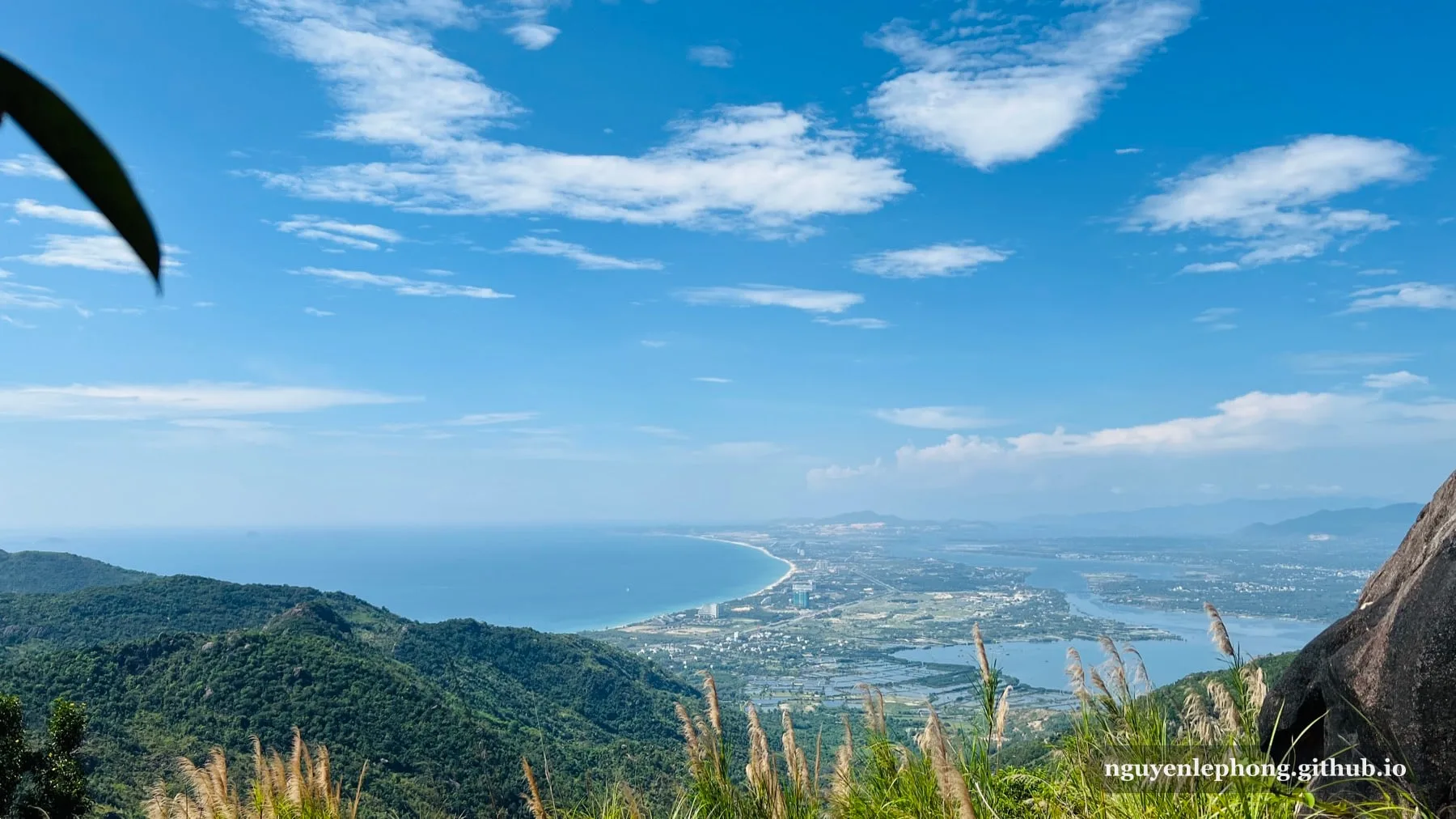
At one point on the trail, the view suddenly widened. The water far below became a thin bright line, the city grew smaller, and one ridge led into another. The slope that had made me breathe hard, seen from a little distance, was only a small line across the mountain. The view did not solve anything for me, but it changed the size of the problem. Something that felt too large at the beginning became part of a wider landscape.
That is one reason outdoor trips help me return to work better. Work often brings deadlines, decisions, meetings, production issues, and many small pressures that do not always announce themselves loudly. The trail asks for fewer things, but it asks honestly: breathe, watch the ground, keep rhythm, respect the people walking with you, and do not turn every beautiful thing into another task to finish quickly. It is not an escape from work. It is a way to refresh something inside, so that when I come back, I bring more energy and calm with me.
972 meters
The marker at the top reads Hoang Nguu Son, 972 m, with a faded red star and an old line that says Blue Eye, 2018. It is a small marker on a big rock, but a whole line of tired people spent the morning walking toward exactly that point.
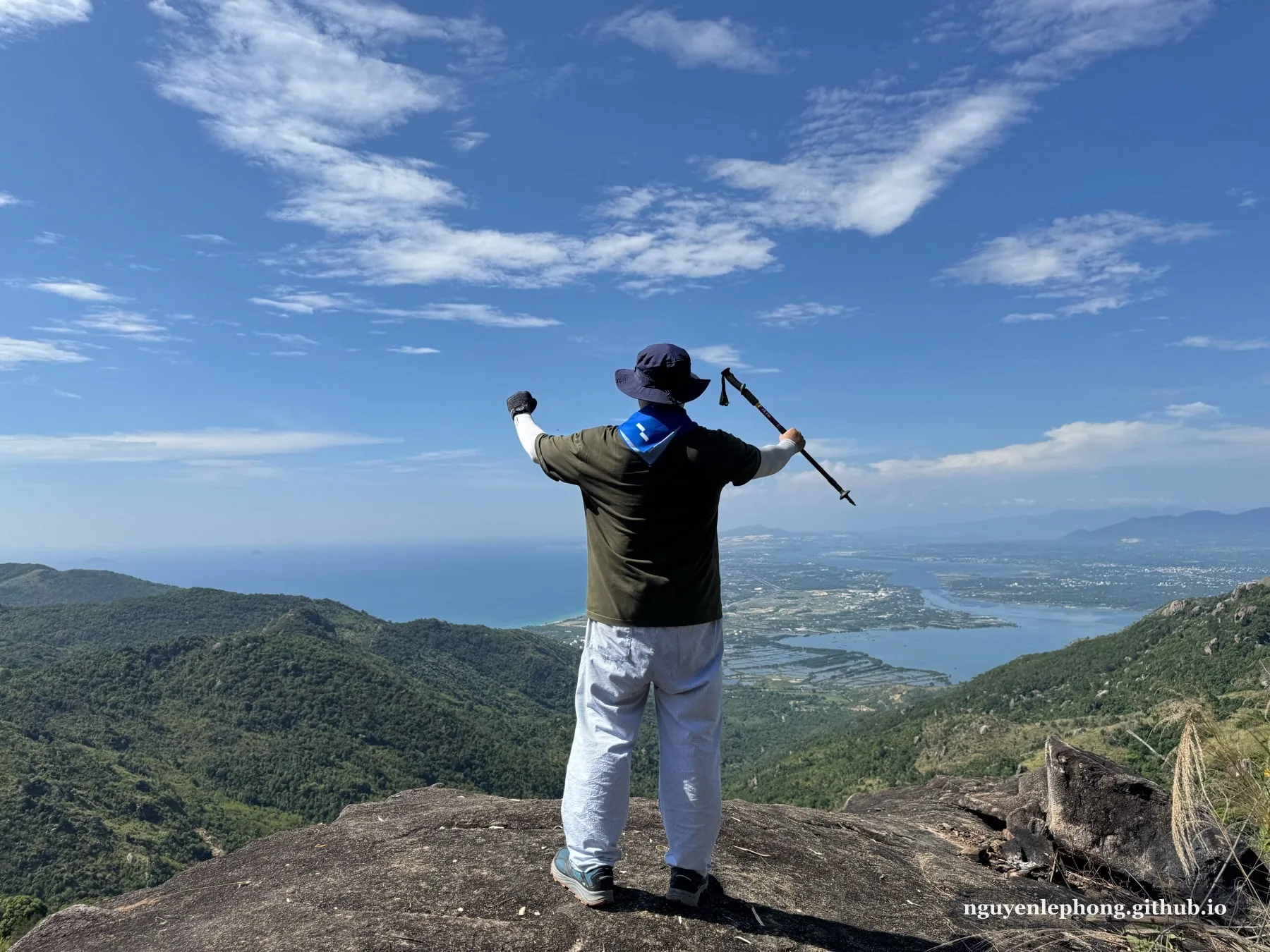
The summit marker gave the day a visible point. But if I only look at that point, I miss the quiet accumulation behind it: the early preparation, the first uncomfortable steps, a few breathless sections, the checkpoints, the patience of the whole group, and the decision not to quit on the hottest stretches. A lot of progress at work is built the same way. From the outside, it can look like one clean finish. From the inside, it is many days of adjusting ourselves a little at a time.
In software, a summit can be a smooth release, a migration that finishes with the data intact, a production fix handled calmly, or a new role that once felt too wide. But those moments rarely appear from nowhere. They are prepared by smaller things: a clearer pull request, a kinder code review, an incident review without blame, a decision to learn the weak area before it becomes the bottleneck. When things get hard, what helps me continue is not pretending everything is easy. It is remembering that every summit is made of very concrete steps.
Come down to climb the next mountain
Descending is not an extra chapter after the summit. It is an important half of the same journey. Many people came down around noon and early afternoon, when Nha Trang was close to 40 degrees and our legs were genuinely tired. The way down made me more awake to my body: happy because we had reached the top, but still needing to watch each step, keep enough energy, and not become careless just because the hardest part seemed finished.
I like this lesson because it applies clearly to work. After a successful project, I cannot stand forever on the feeling of victory. To move to the next level, the first thing is to come down from the current mountain: look honestly at what did not work well, which habits need to be cleared, which skills still have gaps, which collaboration patterns need adjustment, and which parts of the codebase should be cleaned up. If I only hold on to the feeling of having conquered something, I may carry the old fatigue and old weaknesses into the next challenge.
For example, a team that has just completed a difficult release can be happy, and should be happy. But afterward, it still needs to look at what was not good enough: requirements changed too late, test cases were missing, monitoring was thin, communication was uneven. That does not reduce the joy. It protects the joy long enough for the team to go farther next time. Coming down is not moving backward. Coming down is cleaning up, recovering, learning the lesson that needs to be learned, and preparing the legs for the next mountain.
Keep moving with new energy
What I carried down from Hoang Nguu Son was not the feeling that I had defeated a mountain. It was the feeling that I had moved through a very human limit in myself: the limit of doubting too early, of seeing a hard section and quietly shrinking before it. The mountain did not become smaller. I simply understood better that I could go farther if I prepared well, kept rhythm, accepted support, and did not quit when the route was still difficult.
The thought that stayed with me: reaching a summit does not end with the photo at the top. It continues in how I return to work: when things are hard, break them down calmly; when I am tired, adjust the pace; when something is wrong, fix it; after one stage is done, come down the mountain and look at myself more honestly. Then, when the next mountain appears, I can step into it with more energy, more humility, and more trust in my own small steps.
If this reminds you of a trail, a project, or a season when you once thought you could not make it but eventually reached the finish, I would be glad to hear your version. Some of the best conversations begin with looking back and realizing: we went farther than we thought.